São Paulo stands as the undisputed biomedical and healthcare hub of Latin America. Home to world-renowned complexes like the Hospital das Clínicas da Faculdade de Medicina da USP (HC-FMUSP), Hospital Albert Einstein, and Hospital Sírio-Libanês, the metropolitan area processes millions of clinical consultations, dental procedures, and complex surgeries daily. Managing micro-pathogenic control across such a high volume of patient encounters presents severe challenges.
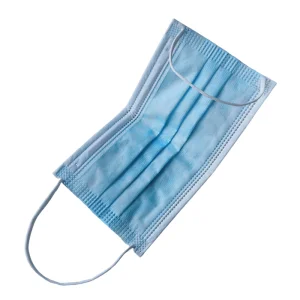
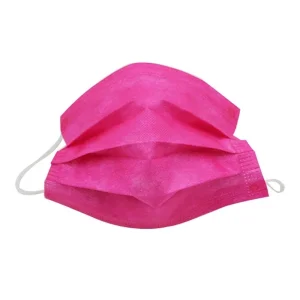
In São Paulo’s subtropical climate, relative humidity often surges during the rainy seasons. Standard face masks without dedicated hydrophobic treatment quickly saturate from both ambient humidity and the wearer’s breath. Once saturated, standard non-wovens experience structural deterioration and capillary action, accelerating the transfer of bacterial vectors from the outside in. Consequently, the local market requires highly specialized, multi-layered Fluid-Resistant Medical Masks (Type IIR or ASTM F2100 Level 3 equivalent) featuring advanced, surface-treated outer layers designed to repel splash hazards without sacrificing breathability.
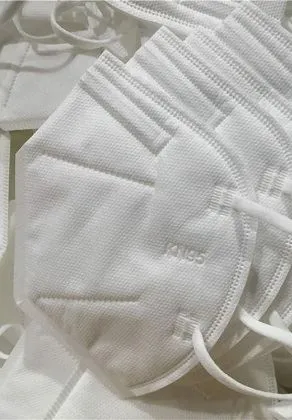
Integrating world-class automated precision lines with high-volume distribution pipelines to secure stable supply chains for São Paulo and worldwide.
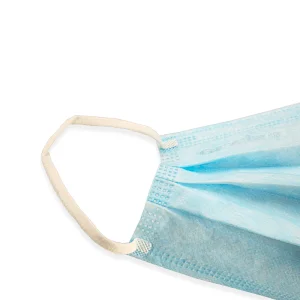
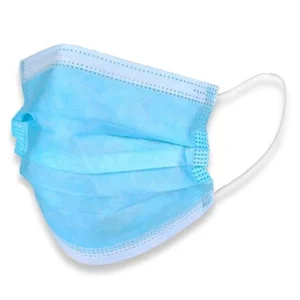
Surgical masks must act as physical barriers against pressurized biological fluids—such as arterial spray during invasive surgical procedures. Understanding the structural layers of our fluid-resistant mask range is fundamental to recognizing their protective capabilities.
The outermost layer utilizes high-tensile spunbond polypropylene, treated with a hydrophobic finish to minimize surface energy. This layer prevents aqueous solutions, saliva droplets, and high-velocity bodily fluids from wetting or saturating the outer face of the mask, maintaining structural integrity under wet conditions.
The filtration core comprises ultra-fine meltblown microfibers that undergo a corona charging process. This permanent electrostatic charge captures sub-micron pathogens (bacteria and aerosol particles) through attraction, securing a ≥99% Bacterial Filtration Efficiency (BFE) while keeping the material porous enough for breathability.
The face-contacting layer is engineered from an ultra-soft, thermal-bonded non-woven fabric. Unlike the outer shell, this layer is hydrophilic, absorbing moisture from the wearer’s breath to reduce heat buildup, skin irritation, and fogging of protective eyewear—critical for São Paulo’s warm humid operating theaters.
Global logistics networks face regular challenges, from port bottlenecks to raw material price volatility. For high-volume medical distributors in Brazil, procurement stability is critical. Henan Tobe Health Co., Ltd. addresses this through extensive scale and integration. Operating out of a 100-mu manufacturing hub with over 400,000 square meters of production space, we maintain consistent control over the entire supply chain.
By integrating raw material warehousing, meltblown extrusion, automatic ultrasonic earloop bonding, and inline visual QA, we minimize reliance on external components. This vertical integration allows us to produce high volumes reliably, shielding clients from the supply issues that disrupt smaller manufacturers.
Additionally, Henan Tobe Health is on the PPE Export Whitelist of the Ministry of Commerce of China. This simplifies export customs clearance, ensuring predictable shipping schedules from Shanghai and Qingdao to the Port of Santos in São Paulo.
Our R&D center, staffed by 20+ dedicated engineers, is advancing the next generation of fluid-resistant PPE. Our focus is on enhancing safety, breathability, and environmental sustainability.
Developing PLA (Polylactic Acid) based spunbond layers that match the hydrophobic properties of polypropylene while shortening degradation times. This helps healthcare facilities in São Paulo reduce non-recyclable clinical waste.
Designing custom nose bridge channels that redirect humid, exhaled air away from surgical eyewear. This structural update addresses fogging issues, improving visibility for surgical staff working in warm environments.
Transitioning filtration technology to electrospun nanofiber membranes. These layers rely on mechanical filtration rather than electrostatic charge, maintaining stable, long-term barrier protection even when exposed to moisture.
Medical mask efficacy depends on reliable, standardized production. Henan Tobe Health Co., Ltd. maintains multiple international quality and regulatory approvals to verify performance at every stage.
Our quality management protocols include real-time testing for differential pressure (Delta P), particle filtration efficiency (PFE), and synthetic blood penetration resistance at 120 mmHg and 160 mmHg.
Our dedicated Latin American supply team coordinates import logistics directly to major distribution centers in Campinas, Guarulhos, and the broader São Paulo area.
 Tobe Health